Gasoline Air Heater for a Home, Cabin or Shed: Sizing to Fuel Cost
Heater Size by Square Footage
Insulation decides the heater size more than floor area does. At 5°F (-15°C) outside, a tight 20×20 cabin needs roughly 2,700 W of heat. The same cabin with thin walls needs nearly double that, and an uninsulated shell needs more than any single 12V unit can deliver.
The table uses the standard heat-loss method: multiply wall, roof and floor area by an insulation factor, then add the difference between inside and outside temperature. Rough guide for the coldest nights of the season:
| Space | Tight (R-13 walls, R-30 roof) | Thin insulation | Uninsulated |
|---|---|---|---|
| 12×20 shed (240 sq ft) | 1,840 W → 2KW unit | 3,690 W → 5KW unit | 10,400 W → no single unit |
| 20×20 cabin (400 sq ft) | 2,740 W → 5KW unit | 5,490 W → two units, or insulate first | 15,400 W → no single unit |
| 24×32 cabin (768 sq ft) | 4,760 W → 5KW, at its limit | 9,520 W → two 5KW units | 26,500 W → no single unit |
| 10×16 greenhouse kept at 40°F (4°C) | Double poly: 4,530 W → 5KW | — | Single poly: 6,650 W → no single unit |
If your coldest nights sit around 32°F (0°C), you need nearly half as much heat. That is why some owners get by with one small heater in a drafty shed, while others in the same footprint freeze with an undersized unit.
Two numbers that matter more than the box rating
A “5KW” heater gives about 4.7KW on its top setting. That is what a healthy unit measures. Don’t oversize, either: a 5KW unit cannot run below roughly 1.4KW, so if your space needs less heat than that for most of the day, the heater cycles on and off, and each restart leaves soot behind. These heaters need to run in their upper range to stay clean. For a tight shed, the 2KW model is the better tool.
Where to Mount an Air Heater in a Cabin or Shed
Mount the heater inside the room you’re heating, next to an outside wall, on a level, solid platform. The combustion air intake and the exhaust run out through that wall. The fuel burns inside a sealed chamber; room air flows over the outside of that chamber and never touches the flame or the exhaust.
Some owners put the heater outside in a weatherproof box and duct only the warm air in. The flame, exhaust and any fuel smell stay outdoors. If you go that route, run a second duct that brings room air back to the heater’s intake, and keep that intake well away from the exhaust outlet.
Exhaust through the wall
- Use the stainless exhaust pipe from the kit, passed through the wall in a metal sleeve with an insulating gasket — never bare pipe against lumber or vinyl.
- Keep the first section clear: near the heater the exhaust can reach about 535°F (280°C).
- Slope it slightly down toward the outside so condensation drains out, not back into the heater.
- End it where fumes can’t drift back in — away from doors, windows, vents and the combustion air intake, and above snow level.
Combustion air and room air
The combustion air intake is a separate small pipe; run it outside and keep its opening well apart from the exhaust outlet. The room-air intake is the large opening on the end of the heater — leave at least 8 in (20 cm) of open space in front of it.
Fuel tank and pump
Mount the fuel pump close to the tank with the outlet end tilted up 15–30°. Keep the tank vent outdoors or in a ventilated spot. In deep cold, winter-blend fuel matters: gasoline blends change seasonally, and stale fuel from a summer can will make starts unreliable. Fit a CO alarm in the room regardless of how good the install is.
Powering an Air Heater On or Off the Grid
A 12V air heater pulls about 8A for the first few minutes while the glow plug lights the fuel, then roughly 0.8–2.2A running. Power options:
| Setup | What works | Watch out for |
|---|---|---|
| Grid power | A 12V battery kept topped up by a charger, or a 120V-to-12V supply rated 20A | A power cut mid-run stops the heater without its cool-down cycle; keep a battery in between |
| Battery only | A 100Ah lithium battery runs a 5KW unit on Medium (about 1.6A) for roughly two days | Small power stations limited to 10A can cut out during the 8A startup |
| Solar | Panels charging a battery bank | Winter sun is weakest when you need heat most; size the battery for several cloudy days |
Never turn the heater off by cutting its power. Use the controller’s own off switch so it runs its cool-down cycle and burns off leftover fuel.
Running Cost vs Propane and Electric
At late-2026 U.S. average prices, gasoline at about $3.10/gal delivers heat at roughly 10–11¢ per kWh. A tight 20×20 cabin needing about 1.9 kW of average output uses a little over a gallon of fuel per day around the clock; a shed heated four hours a day uses a fraction of that.
| Heat source | Price used | Cost per kWh of heat | Cost per day: tight 20×20 cabin |
|---|---|---|---|
| Gasoline air heater | $3.10/gal | ~11¢ | ~$7 |
| Direct-vent propane wall heater (80% eff.) | $2.52/gal | ~12¢ | ~$7.70 |
| Plug-in electric heater | 18.2¢/kWh | ~18¢ | ~$12 |
| Mini split heat pump | 18.2¢/kWh | ~7¢ | ~$4.80 |
Where an air heater wins is independence: no propane delivery, no 240V circuit, no gas line. It heats a cabin at the end of a dirt road as easily as one on town power.
Which Aircozy Heater Fits Your Building: 2KW or 5KW
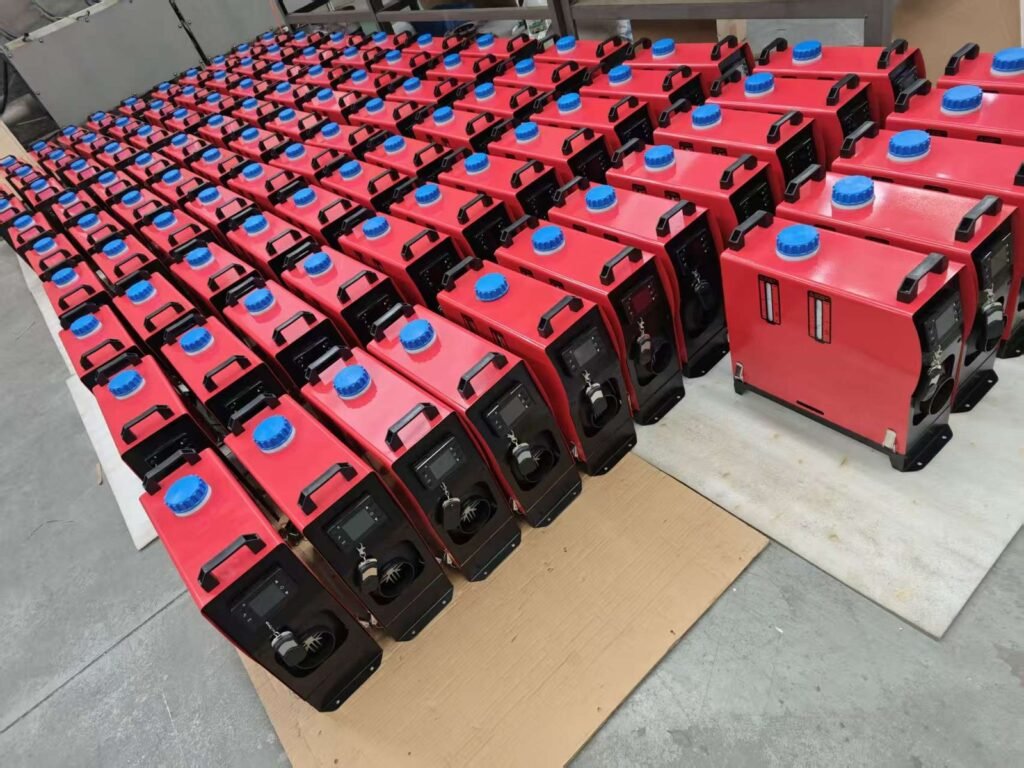
Pick the 2KW for small, tight spaces and the 5KW for cabins and thinly insulated sheds.
| JP 2KW Gasoline Air Heater | JP 5KW Gasoline Air Heater | |
|---|---|---|
| Price | $315 | $375 |
| Best for | Tight sheds under about 2,000 W, ice shacks, small cabins in mild winters | Tight cabins of 400–770 sq ft, thinly insulated sheds, workshops |
| Control | Remote + dial | LCD switch with temperature mode |
| Power | 12V | 12V DC |
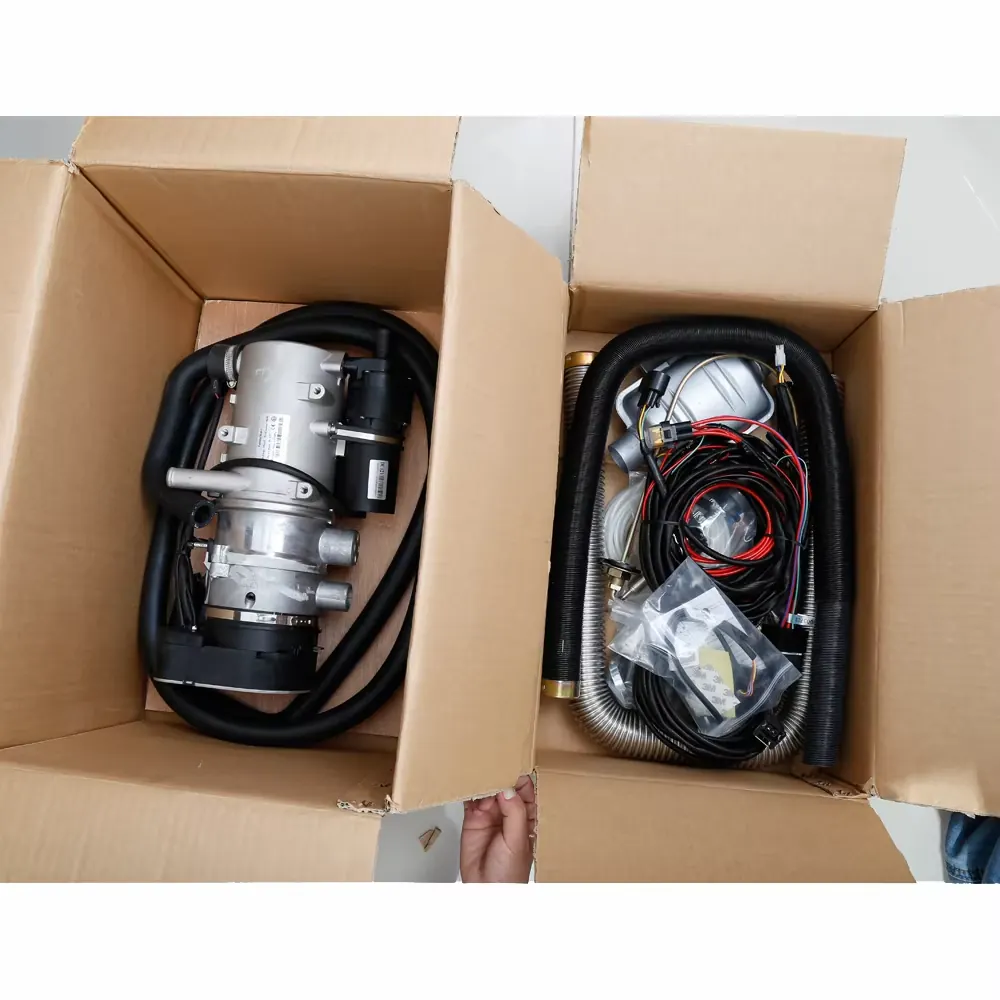
Both burn inside a sealed chamber and vent everything outdoors. Aircozy backs them with a 1-year warranty — if a part fails, we ship the replacement free.
Why pay more than a $100–200 kit?
Plenty of owners run budget kits for years. Where those kits fall short is the parts around the heater: thin heat exchangers, noisy fans, glow plugs that fail in the first season, and fuel lines that stiffen in the cold. The heat exchanger is the wall between the flame and your air — a cast unit holds its shape and sheds heat evenly for years, and it is the first place a bargain kit cuts weight.
Frequently Asked Questions
Can one air heater heat a whole house?
Usually not. A 5KW unit tops out around 4.7KW — enough for a tight cabin up to about 770 sq ft at 5°F. A typical 1,500 sq ft house needs two to four units or a central system.
How many square feet will a 5KW air heater heat?
Up to about 770 sq ft in a well-insulated building at 5°F. With thin insulation, plan on closer to 300 sq ft.
Should I mount the heater outside and duct the heat in?
Both work. Inside, the heater reheats room air and burns less fuel. Outside, the flame, exhaust and fuel smell stay outdoors — just bring room air back to the intake.
How much fuel does it use per day in a cabin?
A 5KW unit burns roughly 0.14–0.48 L/hr, so a tight 20×20 cabin on a 5°F night uses a little under two gallons per day running continuously. Mild nights are far less.
What happens if the power goes out while it’s running?
It stops at once and skips cool-down, which bakes leftover fuel into carbon. Run it from a battery so short outages don’t interrupt the cycle.
Will the heater turn itself off when the room is warm enough?
Yes. Temperature mode lets the heater stop and restart as the room cools, or drop to its lowest setting and hold.
Is it cheaper to run than propane or electric?
Comparable to propane, cheaper than plug-in electric, more than a heat pump — but it needs none of the infrastructure. It wins where independence matters more than the last few cents per kWh.
Heat Your Cabin, Shed or Workshop
Size it to your insulation, vent it through the wall, and give it a battery that can handle the startup. Do those three things and an Aircozy JP 5KW gasoline air heater — or the 2KW unit for small spaces — will keep a small building warm all winter on fuel and power you already understand. Both ship with everything a standard install needs. If you also cook on site, the JP Diesel Cooktop rounds out an off-grid setup nicely.